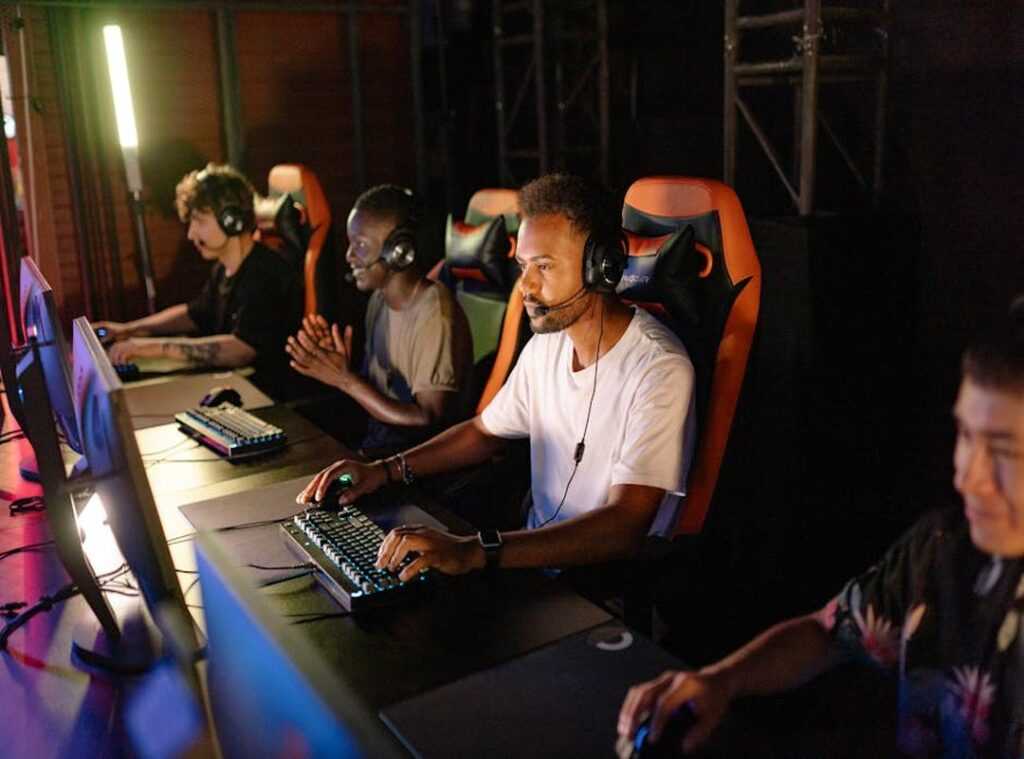
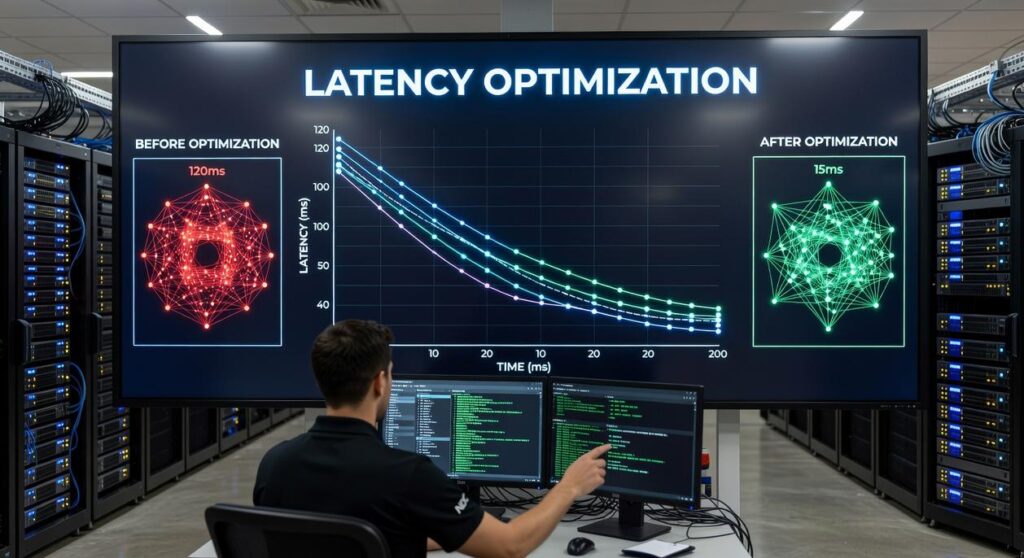
If you’ve ever lost a firefight in your favorite online shooter even though you fired first, you’ve likely felt the hidden sting of latency.
You’re not alone—what looks like a skill gap often comes down to milliseconds of delay. In online gaming, those milliseconds matter.
Latency—whether it’s ping spikes, dropped frames, or connection inconsistency—quietly determines who wins and who loses. When one player has a stable, low-latency connection and another doesn’t, fairness disappears. Over time, that imbalance turns excitement into frustration.
In this article, we dig into how latency actually works in multiplayer games, why some players feel like the game is working against them, and what systems try to fix it—like lag compensation.
More importantly, we’ll show you what you can do as a player or developer to level the playing field.
Fair competitive play isn’t just a tech issue—it’s a fairness issue. Let’s break it down.
Understanding Latency: The Basics Every Gamer Should Know
To truly understand how network prediction and lag compensation enhance your gaming experience, it’s also worthwhile to explore the strategies employed by top players showcased in our article on Gamrawresports.
Let’s settle the debate: latency isn’t just a buzzword—it’s the silent match-wrecker in online gaming.
Latency is the time it takes for data to travel from your device to the game server and back. Think of it like mailing a letter: the further the server (or slower your connection), the longer it takes. Ping is how we measure this, usually in milliseconds (ms), and lower is always better.
Now, toss in some complexity: jitter is the inconsistency in ping over time (like lag on a rollercoaster—fun for your stomach, terrible for aiming). And packet loss is when data doesn’t arrive at all. Imagine shooting a bullet online that never registers. Yeah, not ideal.
So, what causes hit-or-miss gameplay?
Peer-to-peer vs dedicated servers offer a classic A vs B scenario:
- Peer-to-peer connects players directly. It’s cheaper, but latency can spike wildly if one player’s connection is unstable (insert rage-quit here).
- Dedicated servers host everyone through a central system—more stable, though sometimes costlier for developers.
Pro tip: Some games use lag compensation to smooth out connection differences, but it’s not magic—it has limits.
Bottom line: latency is more than numbers—it’s the difference between a clean headshot and missing by a digital mile.
How Latency Skews Multiplayer Gameplay
Picture this: Player A reacts instantly, while Player B lags a full half second behind. In a high-stakes multiplayer match, those 500 milliseconds might as well be an eternity.
Let’s break it down.
Asymmetrical Experience: In any online session, Player A (with low latency) sees the game unfold more accurately than Player B (with high latency). Think of it as watching a live concert vs. a delayed broadcast—one’s in the moment, the other’s playing catch-up. This isn’t just visual—it impacts decision-making. Player A dodges bullets that Player B hasn’t even seen fired yet.
Hit Registration & Timing: Accuracy in shooters hinges on precise input timing. On high latency connections, bullets can miss despite being “on target” from the shooter’s view. Frames matter here. Fast-twitch gameplay (think Call of Duty or Valorant) often devolves into frustration when milliseconds decide wins. (And trust me, nobody likes blaming “lag” two rounds in a row.)
Netcode Translation: Behind the scenes, games use prediction and reconciliation to smooth things over. They try to simulate what should have happened based on inputs. But these systems aren’t perfect—especially when lag compensation misjudges outcomes. Sometimes the game says a shot hit when it didn’t—or vice versa.
Pro Tip: Wired connections beat Wi-Fi. Every. Single. Time.
Developer-Side Solutions: Building for Latency Fairness
Let me say it outright: there’s no such thing as a truly lag-free experience in online games—but that doesn’t mean we can’t design fairer ones.
Some developers argue that smoothing out gameplay with interpolation and extrapolation is enough. (Basically, feeding the player a “best guess” of positions to hide delays.) But here’s my take: relying too heavily on these tricks can break immersion. Think of when you shoot at someone you know you tagged, but the server has other ideas—cue controller toss.
Client-side prediction does get props from me, especially in fast-paced games like Apex Legends or Overwatch. Done right, it prevents your actions from feeling disconnected. But done poorly? Welcome to the world of rubberbanding.
Then there’s fair queueing, where you’re managing tick rates and input delay buffers across players. Some say this can slow responsiveness. I say: would you rather lose to skill or to ping? Fair queueing helps level the playing field when someone’s gaming from a café Wi-Fi roulette wheel.
Server tick synchronization is essential too. Consistent server logic means fewer physics glitches and ghost hits—ask any Rust or CS:GO player.
Pro tip: Implement lag compensation around input timing, not just character position. It makes fairness feel tangible.
Player-Side Strategies: Reducing and Managing Your Own Latency
Ever wonder why you’re getting outgunned even when you swear you fired first? Sound familiar?
Let’s be honest: blaming lag is a rite of passage in multiplayer gaming. But sometimes? It’s not the game—it’s your end of the line.
If you’re using Wi-Fi and streaming a 4K show in the background, you might as well be playing in a digital swamp. Ethernet wins—every time. Prioritizing game traffic through QoS (Quality of Service) settings on your router can also help your inputs punch through the digital noise. (Yes, even if your roommate is watching cooking tutorials in 8K.)
Picking the Right Server
Here’s a question: are you playing with people 3,000 miles away? If so, your matchmaking settings might be sabotaging your gameplay. Choosing servers closer to your region reduces travel time for your data—because yes, ping has a passport.
And don’t overlook in-game options. Frame rate caps, network smoothing, and ping filters can all help reduce perceived stutter. Pro tip: Don’t disable lag compensation unless you really know what you’re doing.
Want a deeper dive into what shapes your gameplay feel? Check out what makes a game responsive delving into input design.
The Role of ISPs and Hardware in Latency Performance
Let’s be honest—latency can feel like dark magic sometimes.
You tweak your setup, restart your router, maybe even scream into the void (hey, we’ve all tried it). But the lag keeps creeping in. Why? Well, that’s where things get interesting—and admittedly, a little uncertain.
While we don’t have every answer (yet), here are three key players in the latency saga:
-
ISP Routing
Your Internet Service Provider doesn’t just “connect you to the web.” Routing paths, peering agreements, and traffic congestion can all add milliseconds, especially during peak hours. Sometimes the route your data takes is the digital equivalent of a road trip with five detours. -
Modem/Router Behavior
Firmware quality (yes, those updates can matter), outdated QoS settings, or unseen Wi-Fi interference (looking at you, microwave) can quietly ruin your experience. A high-end router doesn’t guarantee low latency if it’s not configured right. -
Hardware Latency
Not all input delays come from the network. Peripherals, like old keyboards or laggy wireless mice, may introduce delay. And if your monitor is running at 60Hz while others game at 240Hz? That’s lost time you can actually feel.
It’s also worth considering how games handle lag compensation—tech that tries to mask latency so everyone gets a fair shot (well, fair-ish).
Truth is, optimizing latency is part science, part mystery. But understanding what might go wrong is the first step to setting it right.
Future of Fair Play: Innovations in Latency Equalization
Most conversations around internet speed in gaming focus on connection strength—but that’s just part of the story.
What’s missing? The deeper tech stack. Let’s talk about what really sets the future of latency fairness apart, beyond the basic “plug in your LAN cable” advice.
Here’s where innovation gets interesting:
-
Edge Computing Meets 5G
While rivals mention speed, few spotlight how 5G’s ultra-low delay pairs with edge computing to bring servers physically closer to players. This slashes latency gaps across geographies and levels the playing field—especially in cross-region matchmaking. -
AI-Powered Netcode Isn’t Just Hype
Competitors glance over predictive tech, but advanced engines predict player inputs before they’re sent. This creates real-time dynamic lag balancing, a concept leagues ahead of traditional lag compensation methods. -
Global Low Latency Standards Are Coming
Most overlook the movement toward cross-compatible latency thresholds baked into game engines. These enforce fairness even when players connect from vastly different networks or hardware setups.
Pro tip: Keep an eye on emerging engine SDKs—many are quietly building latency regulators right into frame logic (yes, it’s as technical as it sounds).
Leveling the Online Playing Field
You came here to understand why lag isn’t just annoying—it’s unfair.
Latency doesn’t just frustrate gamers; it disrupts competition. One player’s input delay can decide the match, especially when lag compensation favors one connection over another.
This isn’t just a tech issue for developers to fix. Gamers can take control, too—by optimizing their setups, choosing the right servers, and staying informed about their connection quality.
Now you know that latency disparity is central to fairness in online play—and that reducing it creates better matches for everyone involved.
Time to take action: Test your current connection. Adjust your gaming settings. Push your favorite titles to adopt smarter lag compensation methods. And don’t just settle—optimize.
What to Do Next
Still dealing with lag in key moments? That’s your edge slipping away.
Get reliable tips, connection guides, and expert network insight—so you can outplay, not outwait.
Start optimizing now with our latency control resources—trusted by top-tier gamers and ranked #1 in network fairness coverage. Take control of your connection today.
 Colette Hobbstark has opinions about multiplayer strategy insights. Informed ones, backed by real experience — but opinions nonetheless, and they doesn't try to disguise them as neutral observation. They thinks a lot of what gets written about Multiplayer Strategy Insights, Game Engine Optimization Tactics, Uncategorized is either too cautious to be useful or too confident to be credible, and they's work tends to sit deliberately in the space between those two failure modes.
Reading Colette's pieces, you get the sense of someone who has thought about this stuff seriously and arrived at actual conclusions — not just collected a range of perspectives and declined to pick one. That can be uncomfortable when they lands on something you disagree with. It's also why the writing is worth engaging with. Colette isn't interested in telling people what they want to hear. They is interested in telling them what they actually thinks, with enough reasoning behind it that you can push back if you want to. That kind of intellectual honesty is rarer than it should be.
What Colette is best at is the moment when a familiar topic reveals something unexpected — when the conventional wisdom turns out to be slightly off, or when a small shift in framing changes everything. They finds those moments consistently, which is why they's work tends to generate real discussion rather than just passive agreement.
Colette Hobbstark has opinions about multiplayer strategy insights. Informed ones, backed by real experience — but opinions nonetheless, and they doesn't try to disguise them as neutral observation. They thinks a lot of what gets written about Multiplayer Strategy Insights, Game Engine Optimization Tactics, Uncategorized is either too cautious to be useful or too confident to be credible, and they's work tends to sit deliberately in the space between those two failure modes.
Reading Colette's pieces, you get the sense of someone who has thought about this stuff seriously and arrived at actual conclusions — not just collected a range of perspectives and declined to pick one. That can be uncomfortable when they lands on something you disagree with. It's also why the writing is worth engaging with. Colette isn't interested in telling people what they want to hear. They is interested in telling them what they actually thinks, with enough reasoning behind it that you can push back if you want to. That kind of intellectual honesty is rarer than it should be.
What Colette is best at is the moment when a familiar topic reveals something unexpected — when the conventional wisdom turns out to be slightly off, or when a small shift in framing changes everything. They finds those moments consistently, which is why they's work tends to generate real discussion rather than just passive agreement.