VR used to be an experiment. Now it’s reshaping how we play, connect, and experience entire game worlds.
If you’re here, it’s because you’re trying to make sense of what’s real in the noise — and what’s just another passing gimmick in the world of virtual reality. You’re not alone.
The truth is, the tech is moving fast. From engine-level changes to how multiplayer engagement drives design, it’s not just the headsets getting smarter — the games are, too.
This article dives into vr gaming trends that actually matter right now. We’ve sifted through data on hardware breakthroughs, gameplay mechanics, and the metrics studios are using to build the next generation of immersive worlds.
We’ve grounded this analysis in real-world numbers and game engine developments — not just speculation. So whether you’re a developer trying to stay ahead or a player looking for what’s next, expect a practical look at where vr gaming trends are headed today — and what they mean for your next step beyond the screen.
The Untethered Revolution: How Standalone VR Became the Standard
Let’s talk about the elephant not in the room: the giant gaming PC you no longer need to enjoy high-quality virtual reality.
For years, jumping into VR meant being physically tethered to a power-hungry computer and navigating a minefield of cables and sensors (trip hazards, but make it immersive). The rise of standalone headsets like the Meta Quest changed all that—no wires, no towers, no $2,000 GPU needed. Just put on the headset and go.
Some still argue that wireless VR headsets cut corners—lower graphical fidelity, simplified experiences, weaker hardware. But here’s what they’re missing: developers have adapted. By optimizing games for mobile chipsets, they’ve focused on design ingenuity and performance efficiency over raw horsepower. Beat Saber didn’t need ray tracing to go viral.
The shift has also transformed how games are played. Untethered movement enables room-scale interaction, encouraging intuitive gameplay that feels more human (and sometimes hilariously awkward). Designers are crafting experiences because of the freedom, not in spite of it.
Pro tip: Wireless doesn’t mean weaker—just different priorities.
What most coverage misses? The true innovation isn’t just affordability or accessibility. It’s underlined by how this new freedom is reshaping development culture from the ground up.
It’s not just about convenience. It’s a full ecosystem shift—and perhaps the most pivotal moment yet in vr gaming trends.
Beyond Sight and Sound: The Push for Full-Body Immersion
Let’s be clear—throwing on a headset and waving a couple of controllers was just the beginning.
Today’s battleground in immersive gaming is all about feeling the game. And no, we don’t mean emotionally (although beating a boss with haptic gloves on does hit differently). We’re talking about haptic feedback, which has leveled up beyond rumbles and vibrations.
Some folks argue that traditional setups—VR headset with controllers—are sufficient. And sure, they’re accessible, relatively affordable, and already support today’s game libraries. But compare that to full-body haptics, and the difference is night and day.
Traditional VR Setup vs Full-Body Immersion
-
Controllers Only
Basic haptics, limited physical feedback. Practical, but you’re still just watching yourself play. -
Haptic Vests and Gloves
Feel every kick, punch, and recoil. One player described it as “getting drop-kicked by the future.” -
Treadmills and Body Tracking
Move naturally inside the game world. (Pro tip: You will break a sweat—skip leg day at your own risk.)
The goal? Heighten “presence”—that sensation that you’re actually in the game, not just watching it unfold.
As tech improves and becomes affordable, expect new genres that rely on athletic motion to emerge. Think fight sims that track your real jab or RPGs where your dodge-roll actually matters.
This is vr gaming trends materialized.
Social VR and the Metaverse: The New Multiplayer Arena
Remember when multiplayer gaming was all about leaderboard bragging rights and endless respawns? That era isn’t over—but it’s evolving fast.
Social VR is redefining what it means to “play together.” Instead of just frag counts and fast reflexes, today’s players are logging in to share virtual concerts, host meetups, and build worlds together. Platforms like VRChat and Horizon Worlds aren’t just games—they’re collaborative spaces where users create much of the content themselves.
Some gamers argue this isn’t “real gaming.” They miss the point.
Just because you’re not grinding through quests doesn’t mean it isn’t meaningful multiplayer interaction. (Have you tried surviving a chaotic Among Us VR lobby?)
Pro Tip: Spend time customizing your avatar. In social VR, how you represent yourself plays a huge role in how others interact with you—think of it as your digital body language.
Features like spatial audio make a massive difference. When someone walks behind you in a VR environment and you hear it from behind, your brain buys into that illusion. Add expressive avatars? Social VR captures nuance flat-screen games can’t touch.
As vr gaming trends continue to shift, expect even more fusion between gameplay and social storytelling.
For more on how casual experiences are dominating digital landscapes, see mobile gaming on the rise a deep dive into popular apps.
Blurring Realities: Mixed Reality (MR) Gaming Goes Mainstream
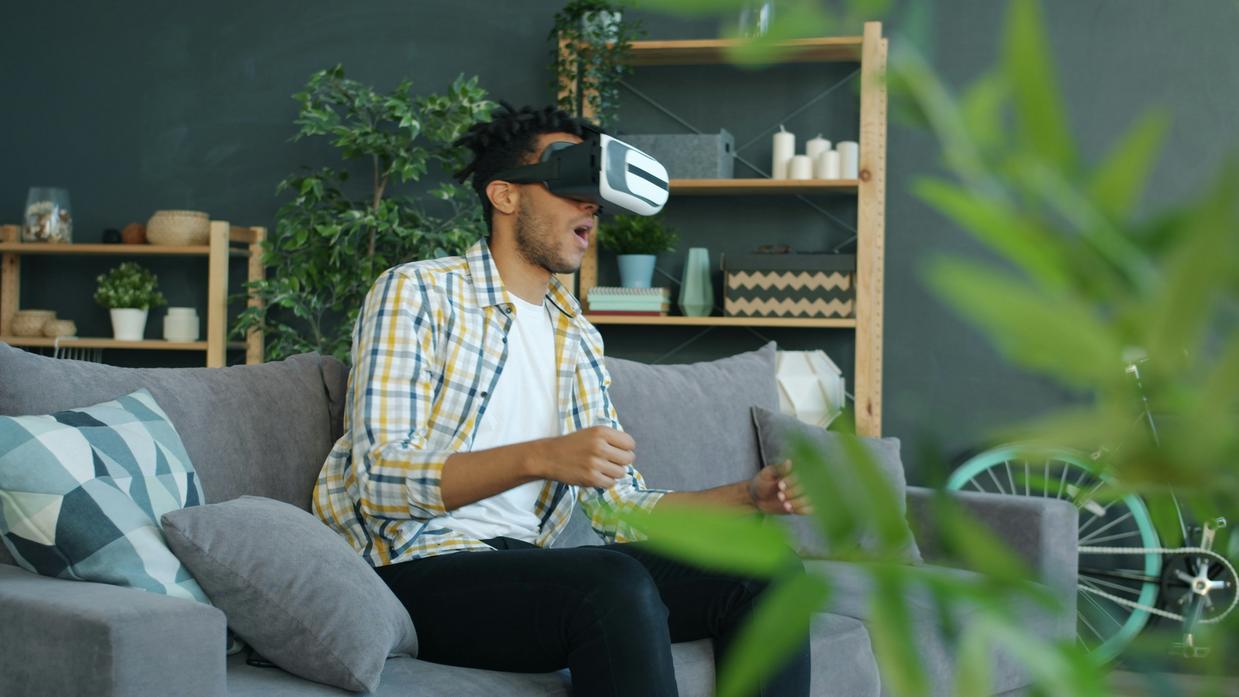
At first, mixed reality (MR) might sound like another buzzword tossed around by tech marketers. But MR is more than marketing—it’s a shift in how we interact with games, merging the digital and physical like never before.
Here’s how it works: MR overlays game graphics onto your actual environment using high-fidelity color passthrough. That means your living room isn’t just where you play a game—it is the game. Picture enemy robots smashing through your real walls (well, digitally), or teaming up with friends in a virtual board game that plays out on your actual coffee table. Even your sofa becomes a playable platform in puzzle challenges.
This isn’t science fiction anymore—it’s powered by the latest generation of headsets like the Meta Quest 3, which use outward-facing cameras and finely-tuned sensors to map your surroundings. This allows for context-aware gameplay that VR could only dream of.
While some argue traditional VR gaming remains more immersive, MR solves a key issue: isolation. MR keeps you grounded in your space—literally—without sacrificing immersion.
Pro tip: Want the best MR experience? Clear your play area. Your furniture’s about to become part of the game.
And yes, in case you were wondering—vr gaming trends now have a new leader. Mixed reality is here, and it’s taking center stage.
Big Names, New Worlds: Why AAA Studios Are All-In on VR
Not long ago, virtual reality felt like the Wild West of gaming—promising, experimental, and filled with rough edges. But that’s changing fast.
Now that AAA studios are diving in—think Capcom’s Resident Evil remakes or Ubisoft’s Assassin’s Creed Nexus VR—we’re seeing serious proof that VR gaming is graduating from side project to main stage. This shift suggests what many hoped: VR isn’t a gimmick anymore. It’s a real platform with commercial staying power.
Still, some argue that AAA involvement won’t move the needle. They’ll point to past VR titles that underperformed despite big names behind them. Fair point—but context matters. In 2026, with improved hardware, better motion tracking, and a maturing user base, we’re in a very different landscape.
Expect this trend to snowball. These polished, high-budget games do more than just look good—they become system sellers. Remember how Halo helped move millions of Xboxes? Same idea here. Throw a Star Wars VR exclusive into the mix, and watch headset sales spike (calling it now: holiday 2026 might be the biggest yet for VR bundles).
And here’s the kicker—once the bar gets raised, players won’t settle for clunky experiences anymore.
Pro tip: Watch for a surge in vr gaming trends tied to franchise-driven releases. When big studios show up, the industry follows.
Your Place in the Virtual Future
You came here to understand what’s shaping the next wave of immersive entertainment—and we’ve delivered.
From vr gaming trends like untethered hardware and deep immersion to the rise of social platforms, mixed reality integration, and top-tier studio investment, the future is forming right before our eyes.
These forces aren’t moving in isolation—they’re converging. Together, they’re making virtual worlds more interactive, more believable, and vastly more accessible for players and creators alike.
Whether you’re preparing to build the next iconic VR title or just planning your next deep-dive playing session, you’re now equipped with the insight to be a step ahead.
The next logical move? Start aligning your efforts with these foundational shifts.
Here’s what to do now:
Explore projects that embrace these vr gaming trends, invest your time or skills where innovation is happening, and stay sharp—because the future won’t wait.
We’re the #1 rated source for real-time analysis in interactive tech—trusted by developers and gamers across the globe.
Your edge is knowledge. Keep it sharp.