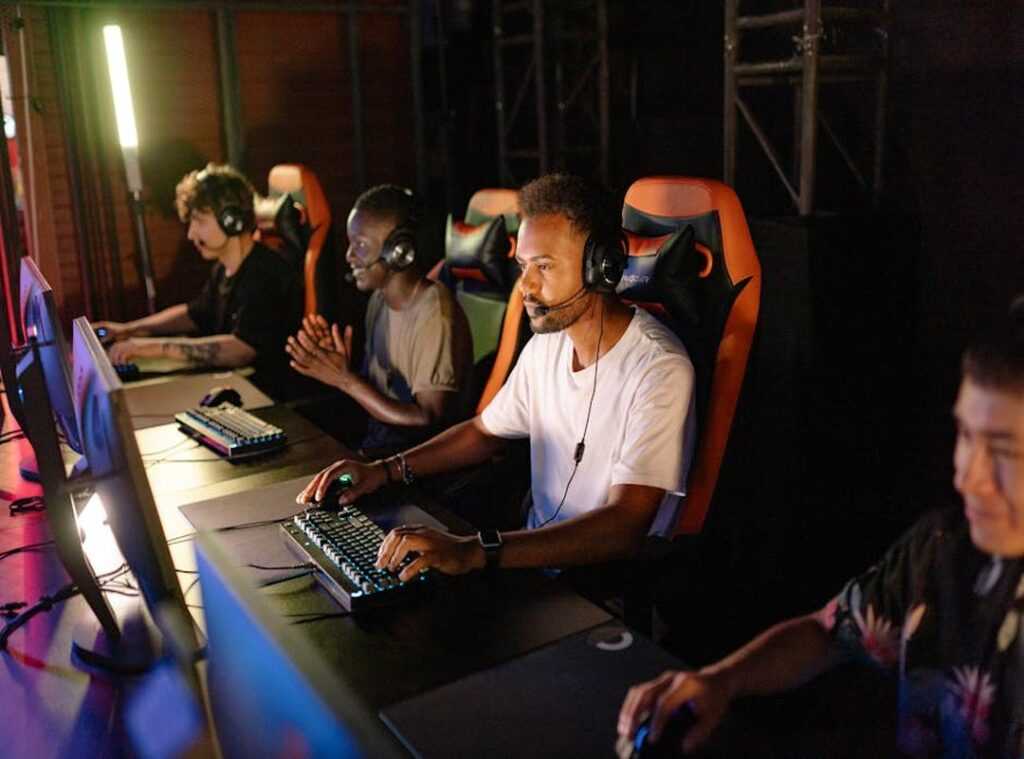

Ever lost a match because everyone went silent at the worst time? We’ve all been there. A flank goes unnoticed, a game-winning plan crumbles.
It’s frustrating. Lack of communication is the final boss holding you back from ranking up and actually enjoying the game. I know this world inside out (countless) hours dissecting what makes winning teams tick. Multiplayer communication tips aren’t just fluff.
They’re your secret weapon for leveling up your game.
This guide? It’s your loot drop. Easy, practical strategies that don’t demand you become an extrovert overnight.
Whether you’re the quiet one avoiding the mic or the wannabe shot-caller, there’s something here for you. Trust me, follow along, and you’ll see your teamwork and win rate shoot up. Ready to start winning?
The Foundation: Why Your Mic is Your Best Weapon
So, you’re diving into online matches. What’s your most underrated tool? Your mic.
Seriously, good communication is your best weapon. Without it, your team is just a bunch of headless chickens.
When we talk about communication, it’s not just “teamwork” fluff. We’re talking tangible stuff. Like better map control, smarter ability usage, and (here’s a big one) less team “tilt.” You know that rage bit when everything falls apart because someone didn’t call out?
Yeah, that.
Breaking it down, there are two core types of in-game comms: Micro and Macro. Micro Comms are the “what’s happening now” moments. Like calling out, “Enemy sniper, top window!” It’s about immediate action.
Then there’s Macro Comms. The big picture stuff. Deciding, “Let’s save our ultimates for the next objective push.” It’s all about planning.
Mastering both? Key. It’s what separates just playing from actually winning.
And if you want more multiplayer communication tips, you might want to check out the best team strategies winning online matches.
We’re starting simple here, but stick around. This guide will build you up, step by step. Let’s make sure next time you’re ready to boss the comms.
Mastering Callouts: The K.I.S.S. Protocol
Let’s talk K.I.S.S. (Keep) It Short & Specific. This isn’t just catchy. It’s your key to stellar callouts in gaming.
You know the drill: crisp, clear, and to the point. Think of it as your secret weapon. When seconds count, you want to nail the essentials.
Callouts have three parts: What, Where, and Status. What are we dealing with? “Tracer.” Where? “On the payload.” Status? “She’s one-shot!” Boom, done. It’s like magic for your team.
In MOBAs, it’s “Enemy jungler, heading top river, no flash.” These callouts save games. But there’s a catch. You need to stay chill.
No one processes a scream.
Why does tone matter? Because panicking spreads like wildfire. Keep it calm, keep it cool.
You’ll thank me later. When you lose your head, so does everyone else. And that’s a disaster.
So, practice staying composed. Your team will function like a well-oiled machine.
Want to go deeper? Check out this mastering communication in video games: an in-depth …. It’s packed with multiplayer communication tips and strategies.
Trust me, it’s worth your time.
The K.I.S.S. method is not just for beginners. Even seasoned players need reminders. Keep it tight.
Keep it smart. And dominate your game.
Level Up: Commanding the Game
Ever tried shouting commands in a game and felt like a broken record? I have. You need more than just reactive callouts to be a shot-caller worth the name.
Transition to proactive, game-winning strategies. It’s not about being bossy (though sometimes it might feel that way). It’s about clear, confident direction.
And believe me, the team will rally behind that.
The IGL: Mastermind in the Shadows
The concept of an In-Game Leader (IGL) isn’t new but is often misunderstood. They’re the silent strategists making those mid-round adjustments, keeping eyes on enemy ultimates, and tracking the economy like it’s the stock market. Ever heard, “They’ve used their support ults.
We’ve got 30 seconds to push”? That’s IGL magic.
Pro tip: Don’t just bark orders. Use actionable phrases. “Let’s play slow this round, bait out their utility” is guidance that feels more like teamwork. Why?
Because it empowers players to think on their feet, not just follow orders. Playing like this turns the tide.
Want more multiplayer communication tips? It’s all about role clarity. Knowing who’s supposed to do what and when transforms chaos into plan.
Check out the role assignment key to multiplayer success for more takeaways.
So, are you ready to step up and be the IGL? It’s not just calling the shots. It’s setting the pace, making adjustments, and yes, sometimes saving the team from certain doom.
Call it thrilling or just smart gaming. Either way, it’s time to level up.
Beyond Words: The Power of Pings, Poses, and Pointers
Gaming without a mic? Been there. It’s common, it’s solid.

Let’s dive into multiplayer communication tips that work without uttering a single word. Contextual ping systems in games like Apex Legends and Valorant are a game-changer. They’re not just buttons; they’re a plan.
You can chain pings together to create a narrative. Imagine pinging “Enemy Spotted” and then “Defending Here.” You’ve just painted a tactical picture for your team.
But let’s not stop there. Ever used character movements to communicate? You should.
Repeated crouching isn’t just a way to avoid sniper shots. It can mean “wait” or “group up.” And spraying a wall? That’s your silent shout of “attack here.” Dropping a specific item might be a plea for help or a request for more ammo.
All these non-verbal cues are a universal language. They’re perfect for when voice chat is out of reach. They make you more aware, more effective, even in the chaos of solo queue.
So next time you’re in a match, consider ditching the mic. Embrace the silent plan. It might just become your secret weapon.
Navigating the Salt Mines: Communication in a Toxic Lobby
We all know it. Multiplayer games can be a battlefield of egos, especially when tempers flare. So how do you communicate without adding fuel to the fire?
Let me share my multiplayer communication tips. First up, the “Mute with a Purpose” plan. Muting isn’t just for blocking out the noise; it’s a chance to regain your focus.
I often mute toxic players but keep giving calm, useful callouts. Does it feel weird talking to folks who might not respond? Maybe.
But it keeps the team sane.
Now, let’s talk positivity. Ever seen how a simple “Nice try” or “Good shot” can change the vibe? It’s true.
It defuses tension and resets morale, making everyone a bit less salty. And when things get too heated, try de-escalating with a line like, “Hey, let’s just focus on the next round. We can still win this.” It sounds simple, but it works wonders.
Remember, you’re there to enjoy the game. Not to let the toxicity take over. So gear up, mute strategically, and keep the vibes positive.
Level Up Your Game Chat
Silent, uncoordinated teams? They’re a one-way ticket to defeat. You’ve found your way through the maze of foundational callouts, shot-calling mastery, and toxic lobby navigation.
Good news: these solutions aren’t just simple. They’re layered, flipping communication from a chore into a game-winning plan. So, what’s next?
It’s time to stop letting bad comms hold you back. Grab your headset, fire up your game, and turn your voice into your team’s most valuable asset. Want the edge?
Dive into multiplayer communication tips and let your words lead the charge. Your team will thank you.
 David Wellstazion writes the kind of multiplayer strategy insights content that people actually send to each other. Not because it's flashy or controversial, but because it's the sort of thing where you read it and immediately think of three people who need to see it. David has a talent for identifying the questions that a lot of people have but haven't quite figured out how to articulate yet — and then answering them properly.
They covers a lot of ground: Multiplayer Strategy Insights, Industry Buzz, Controller Setup and Input Hacks, and plenty of adjacent territory that doesn't always get treated with the same seriousness. The consistency across all of it is a certain kind of respect for the reader. David doesn't assume people are stupid, and they doesn't assume they know everything either. They writes for someone who is genuinely trying to figure something out — because that's usually who's actually reading. That assumption shapes everything from how they structures an explanation to how much background they includes before getting to the point.
Beyond the practical stuff, there's something in David's writing that reflects a real investment in the subject — not performed enthusiasm, but the kind of sustained interest that produces insight over time. They has been paying attention to multiplayer strategy insights long enough that they notices things a more casual observer would miss. That depth shows up in the work in ways that are hard to fake.
David Wellstazion writes the kind of multiplayer strategy insights content that people actually send to each other. Not because it's flashy or controversial, but because it's the sort of thing where you read it and immediately think of three people who need to see it. David has a talent for identifying the questions that a lot of people have but haven't quite figured out how to articulate yet — and then answering them properly.
They covers a lot of ground: Multiplayer Strategy Insights, Industry Buzz, Controller Setup and Input Hacks, and plenty of adjacent territory that doesn't always get treated with the same seriousness. The consistency across all of it is a certain kind of respect for the reader. David doesn't assume people are stupid, and they doesn't assume they know everything either. They writes for someone who is genuinely trying to figure something out — because that's usually who's actually reading. That assumption shapes everything from how they structures an explanation to how much background they includes before getting to the point.
Beyond the practical stuff, there's something in David's writing that reflects a real investment in the subject — not performed enthusiasm, but the kind of sustained interest that produces insight over time. They has been paying attention to multiplayer strategy insights long enough that they notices things a more casual observer would miss. That depth shows up in the work in ways that are hard to fake.